Category: Flamenco Basics

First steps for adults who are new to flamenco: what it is, how classes work, posture, arms and the habits that make learning easier.

  • Flamenco Posture: How to Stand Like a Flamenco Dancer, Step by Step

    Flamenco Posture: How to Stand Like a Flamenco Dancer, Step by Step

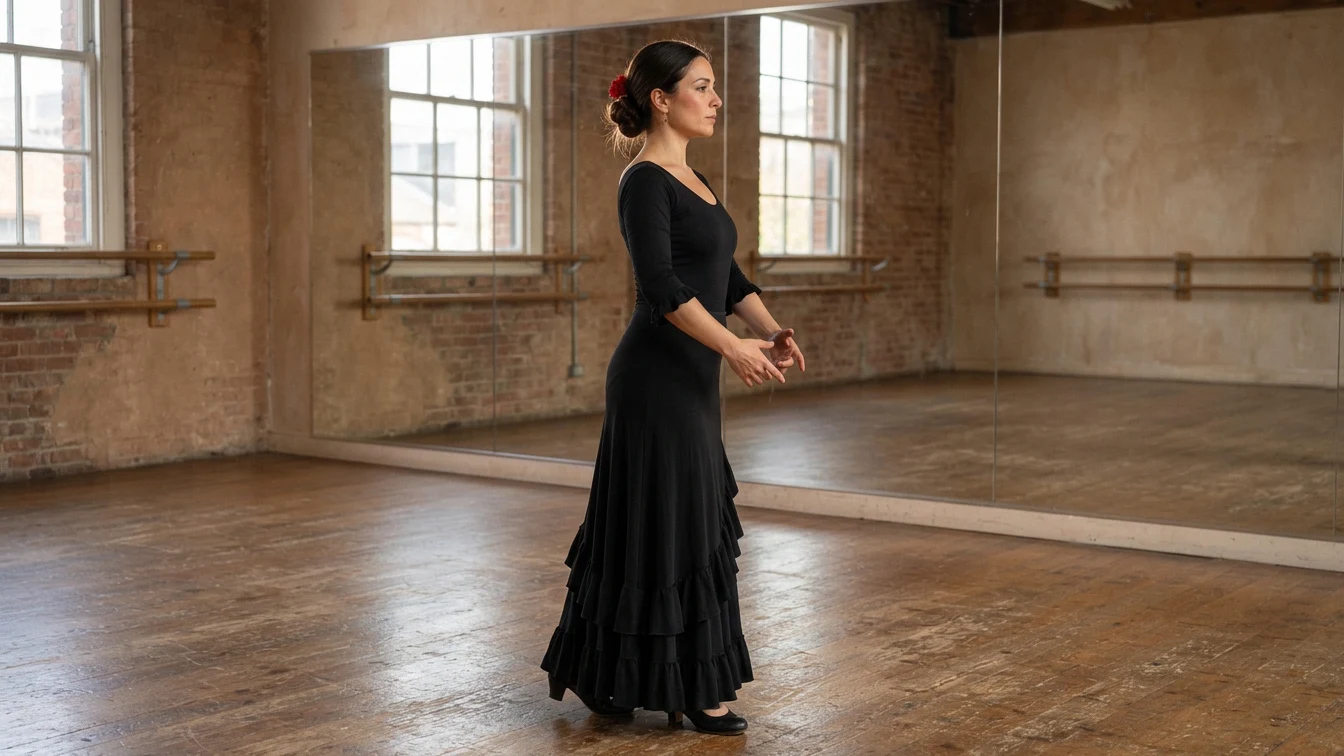
    Good flamenco posture is lifted and grounded at the same time: the chest rises, the shoulders stay down and back, the core is gently active, the knees are soft and the weight rests slightly forward. Every movement in flamenco, from the arms to the fastest footwork, depends on this base.

    Teachers spend a lot of time on posture with beginners because a weak stance causes two problems later: footwork sounds uneven and the lower back gets tired or sore. The good news is that posture can be practiced anywhere, without music or special shoes.

    What you need

    • A mirror where you can see your whole body, ideally from the side as well.
    • Comfortable clothes that let you see the line of your back.
    • Five to ten minutes a day.

    Build the posture in seven steps

    1. Feet: stand with your feet together or slightly apart, toes pointing forward.
    2. Knees: bend them just enough to unlock them. They should never be pushed back.
    3. Pelvis: let it sit in neutral, neither tucked under nor tipped forward.
    4. Core: gently draw the belly in, as if closing a tight belt one notch.
    5. Chest: breathe in and let the chest rise without lifting the shoulders.
    6. Shoulders: slide the shoulder blades down and slightly together.
    7. Head: lengthen the back of the neck, keep the chin level and look ahead with intention.

    Hold the position for 30 seconds while breathing normally. If you need to hold your breath to stay lifted, you are using too much force.
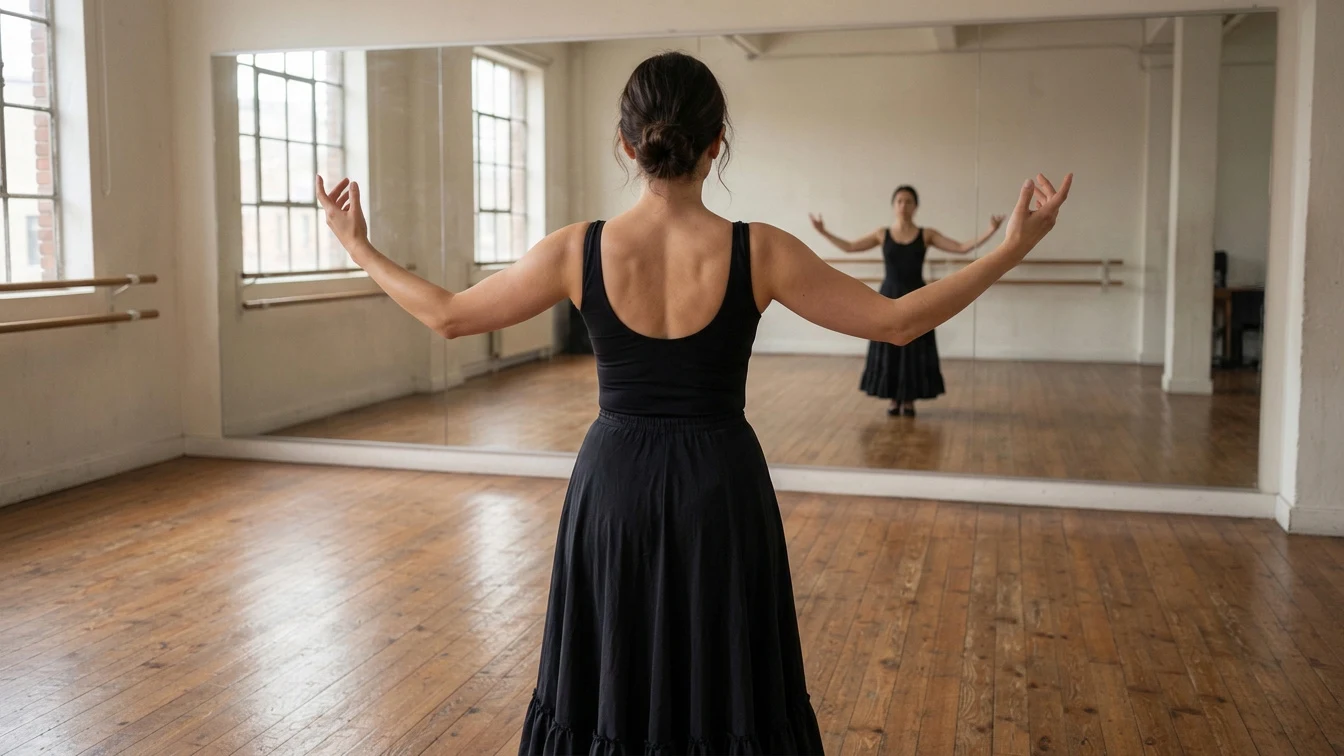
    Back view of a woman practicing flamenco posture with shoulders down and arms open in a studio

    Mirror checklist

    CheckCorrectNeeds adjustment
    ShouldersLow and relaxed, neck looks longRaised toward the ears
    ChestLifted, openCollapsed or pushed out by arching the back
    Lower backLong, natural curveDeep arch or flat and tucked
    KneesSlightly bentLocked straight
    WeightOver the balls of the feet, heels still touchingBack on the heels
    GazeForward and proudDown at the floor

    Common posture mistakes and how to fix them

    Arching the lower back to lift the chest

    This is the most frequent error. It looks proud in the mirror but compresses the lower back. Fix it by engaging the belly first and then lifting the chest from the ribs, not from the waist.

    Shoulders creeping up during arm work

    When the arms rise, the shoulders tend to follow. Practice raising the arms slowly while watching the space between your shoulders and ears. If it shrinks, lower the arms and start again.

    Straight, locked knees

    Locked knees make footwork jarring and transfer impact to the joints. Keep a small, constant bend, even when standing still.

    Leaning back during footwork

    Beginners often lean back when the feet get busy. Keep the weight slightly forward and the torso still, so the legs work independently from the upper body.
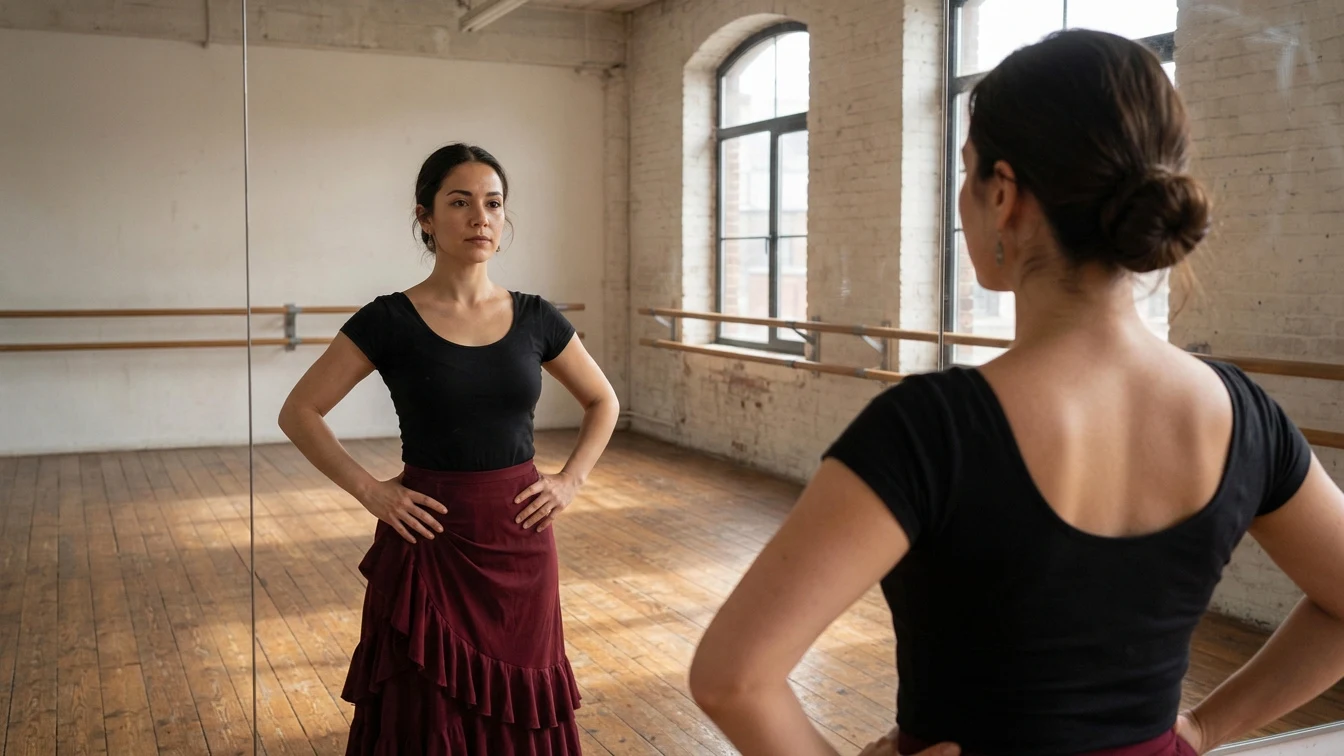
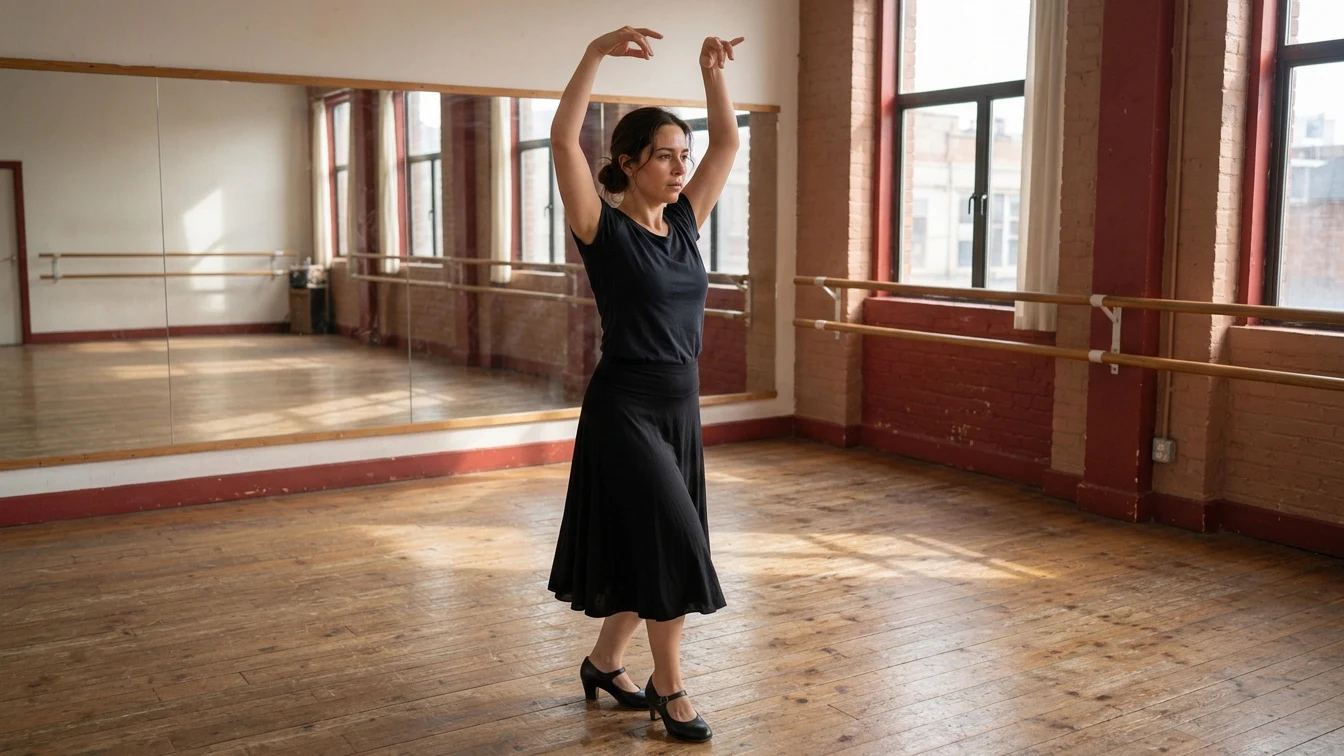
    Flamenco student with hands on hips checking her posture in a studio mirror

    How posture changes when you start to move

    Standing still in good posture is the first step. The real challenge is keeping it while the arms, hips and feet are busy. Each part of the dance tests posture in a different way:

    MovementWhat tends to breakWhat to focus on
    Arm work (braceo)Shoulders lift toward the earsKeep the shoulder blades sliding down as the arms rise
    FootworkTorso bounces or leans backWeight slightly forward, belly engaged, head still
    TurnsChest collapses, head dropsLift the chest before turning and spot a fixed point
    Skirt workBack arches when the hands hold the skirtKeep the ribs closed and the lower back long
    Walking stepsKnees straightenKeep a small bend in both knees on every step

    A practical way to train this is to add one movement at a time. Hold the posture, then add slow arms for one minute. When the shoulders stay down, replace the arms with simple marching footwork. Only combine arms and feet once each part works on its own.

    Fatigue is the enemy of posture. In the last minutes of a class or a home session, notice when your shoulders rise or your chest drops, and use that moment to reset rather than pushing through with poor alignment.

    Three short exercises to make it stick

    • Wall check (1 minute): stand with your back near a wall, heels a few centimeters away. Feel the back of the head and the shoulder blades lightly touch it, then step away and keep the shape.
    • Breathing lift (2 minutes): in posture, breathe in for four counts lifting the chest, breathe out for four counts keeping it lifted.
    • Posture walk (2 minutes): walk slowly around the room keeping the posture, as if crossing a stage.

    Once posture feels natural, the next skills are the arms and simple footwork, explained in our flamenco dance for beginners guide. If you are curious about the art behind the dance, read what flamenco is and where it comes from.

    Health note: this guide is general information and does not replace a qualified teacher or a health professional. If you have back, hip or knee pain, consult a doctor or physiotherapist before practicing.

    Frequently asked questions

    Why do flamenco dancers lift the chest so much?

    The lifted chest gives the dance its proud, expressive character and frees the arms to move. It also keeps the body aligned so the legs can produce clean footwork.

    Should my knees be bent in flamenco?

    Yes, slightly. Soft knees absorb the impact of footwork and help you stay balanced. Locked knees transfer the impact to the joints.

    How long does it take to get good posture?

    Many beginners feel more comfortable after a few weeks of daily practice, but posture keeps improving for as long as you dance. Short, frequent practice works better than long sessions.

    Can posture practice help outside of dance?

    The awareness you build in flamenco often carries into daily life, making you more conscious of how you stand and sit. It is not a treatment for back problems, which need medical advice.

    Your next step

    Practice the seven steps for five minutes today, then move on to the arms. All the beginner topics are collected in our Flamenco Basics section.
  • What Is Flamenco? The Dance, Song and Guitar of Andalusia Explained

    What Is Flamenco? The Dance, Song and Guitar of Andalusia Explained

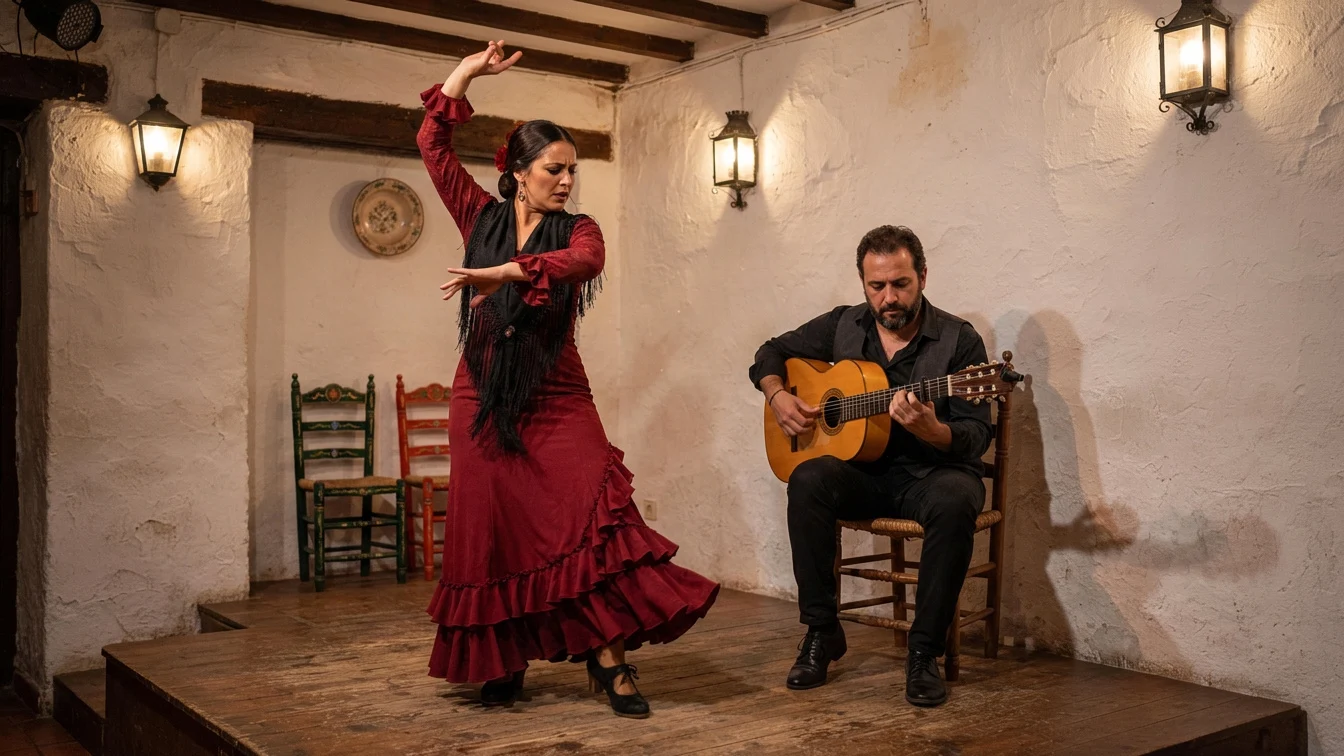
    What is flamenco? It is an art form from Andalusia, in southern Spain, that brings together singing, guitar playing and dance, along with handclaps, finger snaps and shouts of encouragement. A flamenco performance can be intimate and slow or fast and explosive, but it always follows rhythmic patterns that the musicians and the dancer share.

    Many people first meet flamenco as a dance with ruffled dresses and loud footwork. That image is real, but it is only one part of the picture. Understanding the whole art makes the dance easier to learn, because in flamenco the dancer is also part of the music.

    The three pillars: cante, toque and baile

    Flamenco is usually described through three elements that can appear together or alone:

    ElementSpanish termRole
    SongCanteConsidered the heart of flamenco; the voice carries the emotion and the lyrics
    GuitarToqueKeeps the rhythm, plays introductions and answers the singer
    DanceBaileExpresses the song with the body and adds rhythm with the feet and hands

    Around these three you will hear palmas (rhythmic handclaps), pitos (finger snaps) and jaleo (shouts such as “olé” that encourage the performers). In many modern performances the cajón, a wooden box drum, also supports the rhythm.

    Where flamenco comes from

    Flamenco took shape in Andalusia over centuries, through the meeting of many cultures that lived in the region, with a central role played by Andalusian Gitano (Roma) communities. Historians still debate the details of its origins, and the art has kept evolving through the 19th and 20th centuries, from small gatherings to cafés cantantes, theatres and international stages.

    Its cultural importance is officially recognized: in 2010, UNESCO inscribed flamenco on its Representative List of the Intangible Cultural Heritage of Humanity, describing an expression transmitted through families, groups and schools. The regional government of Andalusia also maintains a public portal dedicated to flamenco, with information on festivals, archives and education.

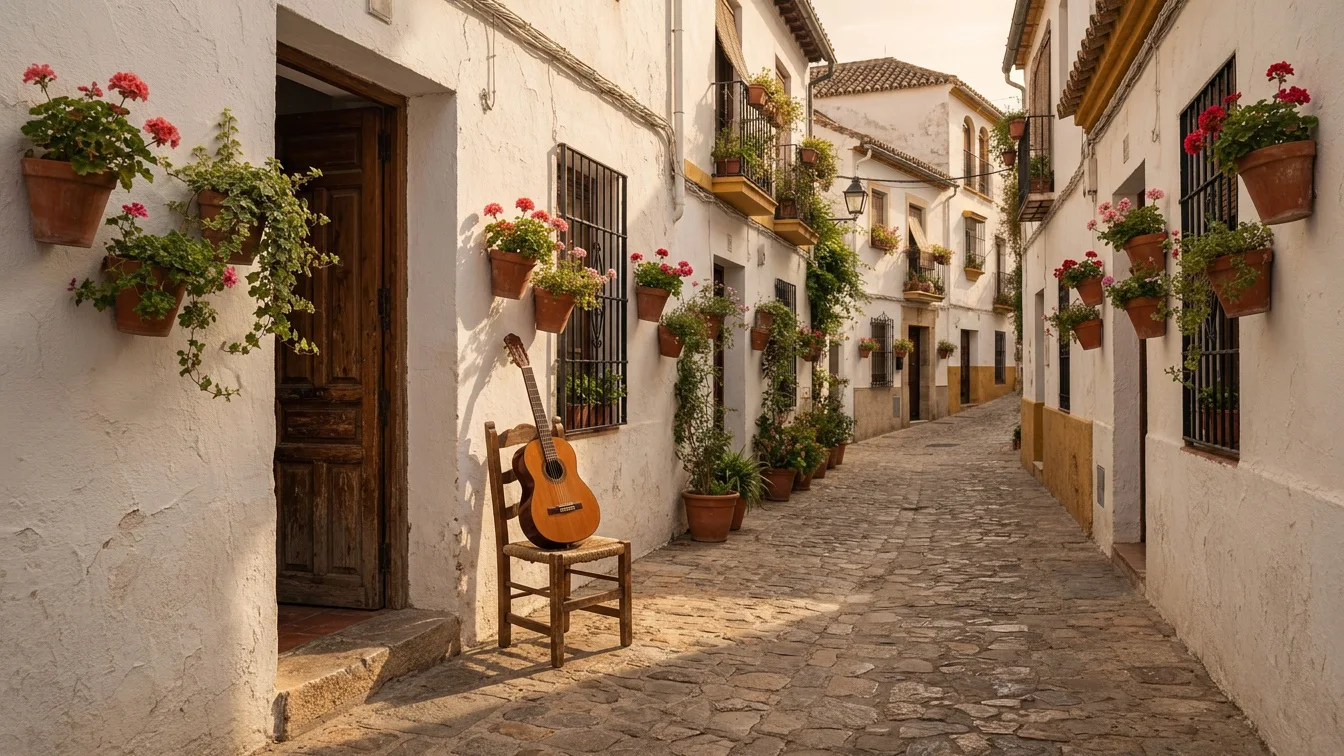
    Spanish guitar resting on a wooden chair in a whitewashed Andalusian street with flower pots

    What makes flamenco unique

    Rhythm with fixed cycles

    Each flamenco style follows a rhythmic cycle called compás. Several of the most important styles count in 12 beats, with accents in specific places, which gives flamenco its unmistakable swing. Dancers, guitarists and singers all lock into the same cycle.

    Styles called palos

    Flamenco is divided into styles known as palos, each with its own rhythm, mood and often its own region of origin. Soleá is deep and solemn, alegrías is bright and festive, bulerías is fast and playful, and tangos has a strong, earthy four-beat feel.

    Improvisation inside a structure

    Flamenco performers improvise, but within rules. The dancer gives signals to the guitarist with the feet, and the guitarist follows the singer. This conversation is what makes a live performance feel alive.

    Duende

    Flamenco artists and audiences talk about duende: a moment of deep emotional intensity that moves everyone present. It cannot be taught directly, but it is the reason many people fall in love with the art.

    Flamenco dance at a glance

    The dance combines a proud, upright posture with expressive arms and rhythmic footwork. Women’s and men’s styles were historically different, with more flowing arms and skirt work for women and more footwork for men, but today dancers of any gender learn the full range. Accessories such as the fan, the shawl and castanets appear in some styles.

    • Posture: chest lifted, shoulders down, knees soft.
    • Arms (braceo): wide, rounded paths that start from the back.
    • Hands (floreo): circular wrist and finger movements.
    • Footwork (zapateado): heel, ball and flat-foot strikes that create rhythm.

    If you want to start dancing, our complete guide to flamenco dance for beginners explains each of these skills in the order teachers use.

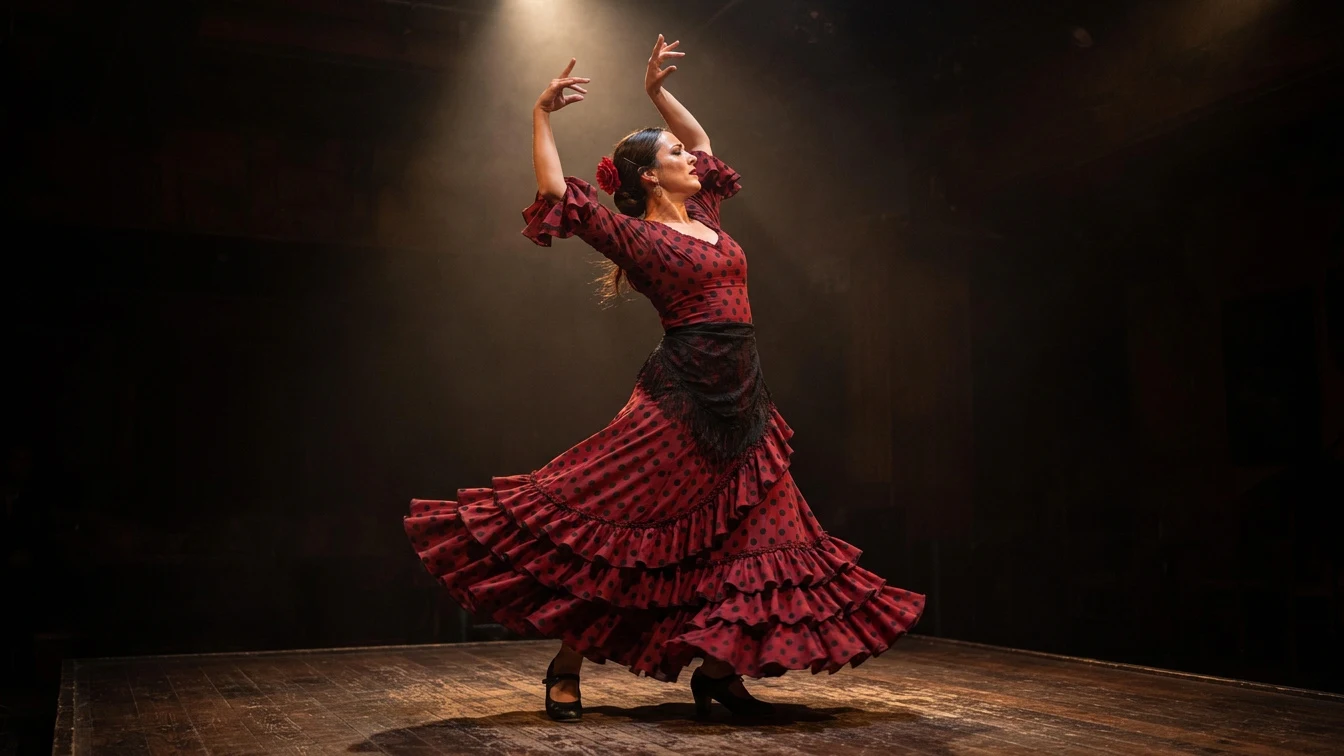
    Flamenco dancer mid-turn on a dark stage with her polka-dot ruffled skirt swirling

    How flamenco is performed today

    Flamenco lives in very different settings, and each one shows a different side of the art. Knowing them helps you choose what to watch as a beginner.

    • Peñas and private gatherings: small clubs and family celebrations where singers, guitarists and dancers perform for people who know the art well. The atmosphere is intimate and spontaneous.
    • Tablaos: venues dedicated to flamenco, with a small stage close to the audience. Shows usually combine several palos and give you a full view of song, guitar and dance.
    • Theatres and festivals: large productions with choreography, lighting and sometimes a full company. Many international festivals bring flamenco to cities far from Spain.
    • Schools and studios: academies teach the dance, guitar and song, from children to adult beginners, and often hold student showcases.
    • Fusion and new flamenco: since the late 20th century many artists have mixed flamenco with jazz, pop and other music, which brought it to new audiences while purists continue the traditional forms.

    If you can, watch a live performance before or during your first months of classes. Seeing how the dancer listens to the singer and guitarist explains more about flamenco than any description, and it will make the rhythm exercises in class feel much more meaningful.

    When you watch, pay attention to three moments: the start, when the guitarist sets the rhythm and the dancer waits; the middle, when the dancer responds to the singer’s verses with arms and small steps; and the footwork section near the end, which often speeds up until a final remate closes the piece.

    Words you will hear in your first class

    WordMeaning
    CompásThe rhythmic cycle of a style
    PaloA flamenco style, such as soleá or bulerías
    ZapateadoFootwork
    BraceoArm movement
    LlamadaA call, a footwork signal that marks a change
    RemateA closing phrase that finishes a section
    Bailaor, bailaoraFlamenco dancer
    TablaoA venue dedicated to flamenco performances

    Frequently asked questions

    Is flamenco Spanish or Gypsy?

    Flamenco developed in Andalusia, Spain, through the interaction of different communities, with a central contribution from Andalusian Gitano (Roma) people. It is considered part of Spanish and Andalusian culture and is recognized by UNESCO as heritage of humanity.

    Is flamenco a dance or a type of music?

    Both. Flamenco is a complete art that includes song, guitar music and dance. Each can be performed alone, but they are deeply connected.

    What does “olé” mean in flamenco?

    “Olé” is a form of jaleo, an expression of encouragement and appreciation shouted by performers or the audience at a strong moment of the performance.

    Do you need to speak Spanish to learn flamenco?

    No. Teachers worldwide teach in many languages. You will learn a small set of Spanish terms for steps and rhythms, which quickly become familiar.

    Your next step

    Now that you know what flamenco is, the best place to start dancing is the body itself. Read our guide to the basics of flamenco for beginners, starting with posture, and come back to the music side when you explore flamenco rhythm and styles.

  • Flamenco Dance for Beginners: A Complete Guide for Adults Starting From Zero

    Flamenco Dance for Beginners: A Complete Guide for Adults Starting From Zero

    Flamenco dance for beginners starts with three things, and none of them is fast footwork: a strong, lifted posture, a basic sense of the rhythm and a few simple steps you can repeat without strain. Adults who begin with those foundations usually feel comfortable in a class within the first months, even if they have never danced before.

    This guide walks you through the whole path, in the order most teachers follow: what flamenco is, how your body should be placed, how the arms and feet work, how to count the music, what to wear and how to practice at home between lessons. Each section points to a deeper guide in our Flamenco Basics section when you are ready for more.

    What makes flamenco different from other dances

    Flamenco is an art form from Andalusia, in southern Spain, that combines singing (cante), guitar playing (toque) and dance (baile). In 2010 it was inscribed by UNESCO on the Representative List of the Intangible Cultural Heritage of Humanity, which describes it as an expression shaped over centuries by many communities in the region.

    For a beginner, three features stand out:

    • The dancer is also a musician. Your feet, your claps and even your finger snaps add sound to the music, so rhythm matters as much as shape.
    • The music follows fixed rhythmic cycles. Many styles count in cycles of 12 beats with accents in specific places, which is why counting feels strange at first.
    • Improvisation lives inside structure. Experienced dancers react to the singer and guitarist, but always within the rules of each style.

    What you will learn first, in order

    Most beginner courses follow a similar sequence. Knowing it helps you judge your progress and avoid jumping ahead to steps that strain your knees.

    StageWhat you practiceTypical goal
    1. PostureLifted chest, long neck, relaxed shoulders, slightly bent kneesHold the position for a full song without slumping
    2. Arms and handsBraceo (arm paths) and floreo (wrist and hand circles)Move arms slowly and smoothly while the body stays still
    3. Basic footworkGolpe, planta, tacón and simple sequencesClean, even sounds at a slow tempo
    4. RhythmCounting compás and clapping palmasMark the accents of one style with claps
    5. A first choreographyOften sevillanas or tangos, which have clear structuresDance a short piece from start to finish
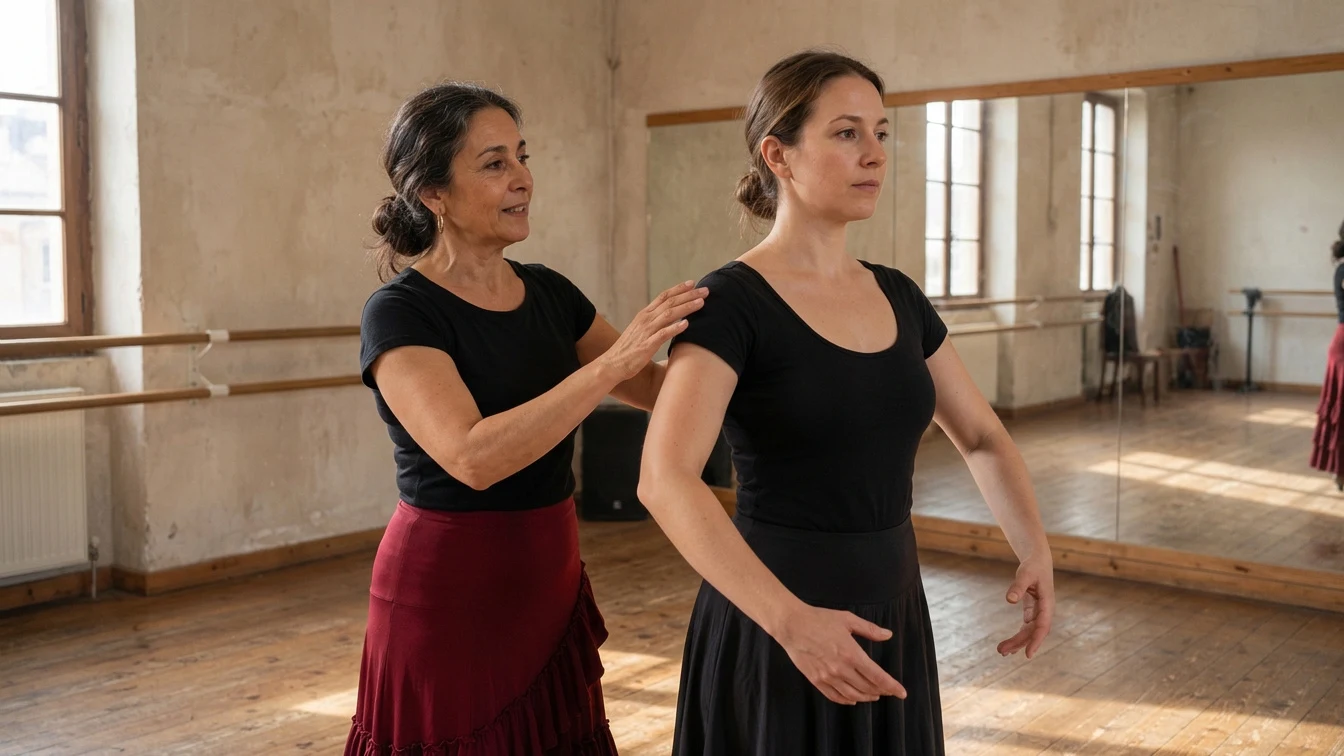
    Flamenco teacher adjusting a beginner student's shoulders to correct her posture

    Posture: the foundation of every movement

    Flamenco posture looks proud and grounded at the same time. The chest is lifted, the shoulders stay down and back, the neck is long and the weight sits slightly forward over the balls of the feet, with the knees soft rather than locked. The lower back stays long, without arching.

    Beginners often lift the chest by squeezing the lower back, which tires the body quickly and can cause pain. A useful check is to place one hand on your belly and the other on your lower back: you should feel the belly gently engaged and the back long, not pinched.

    A quick posture routine

    1. Stand with feet together and knees slightly bent.
    2. Breathe in and let the chest rise without lifting the shoulders.
    3. Draw the shoulder blades down, as if sliding them into your back pockets.
    4. Lengthen the back of the neck and look straight ahead.
    5. Hold for 30 seconds, rest, repeat three times.

    Arms and hands: braceo and floreo

    Flamenco arms move in wide, rounded paths called braceo, while the wrists and fingers draw small circles called floreo. The movement starts from the back and shoulders, not from the hands. Women’s and men’s styles traditionally differ: hand circles are often more flowing in women’s dance and more contained in men’s, although modern teachers mix both.

    Practice arms in front of a mirror with music playing softly. Move one arm at a time from the hip, up past the front of the body and over the head, keeping the elbow slightly rounded. When that feels natural, add the wrist circle at the top of the movement.

    Footwork: start slow and quiet

    Footwork, called zapateado, is the part every beginner wants to learn, and the one that most often causes knee and shin pain when rushed. The basic sounds are:

    • Golpe: the whole flat foot strikes the floor.
    • Planta: the ball of the foot strikes the floor.
    • Tacón: the heel strikes the floor while the ball stays down.
    • Punta: the tip of the shoe taps behind you.

    Keep the knees soft and let the sound come from the floor contact, not from stamping with force. Clean, even sounds at a slow speed are worth more than fast, uneven ones. Most teachers ask beginners to practice short sequences at a slow metronome speed for weeks before increasing tempo.

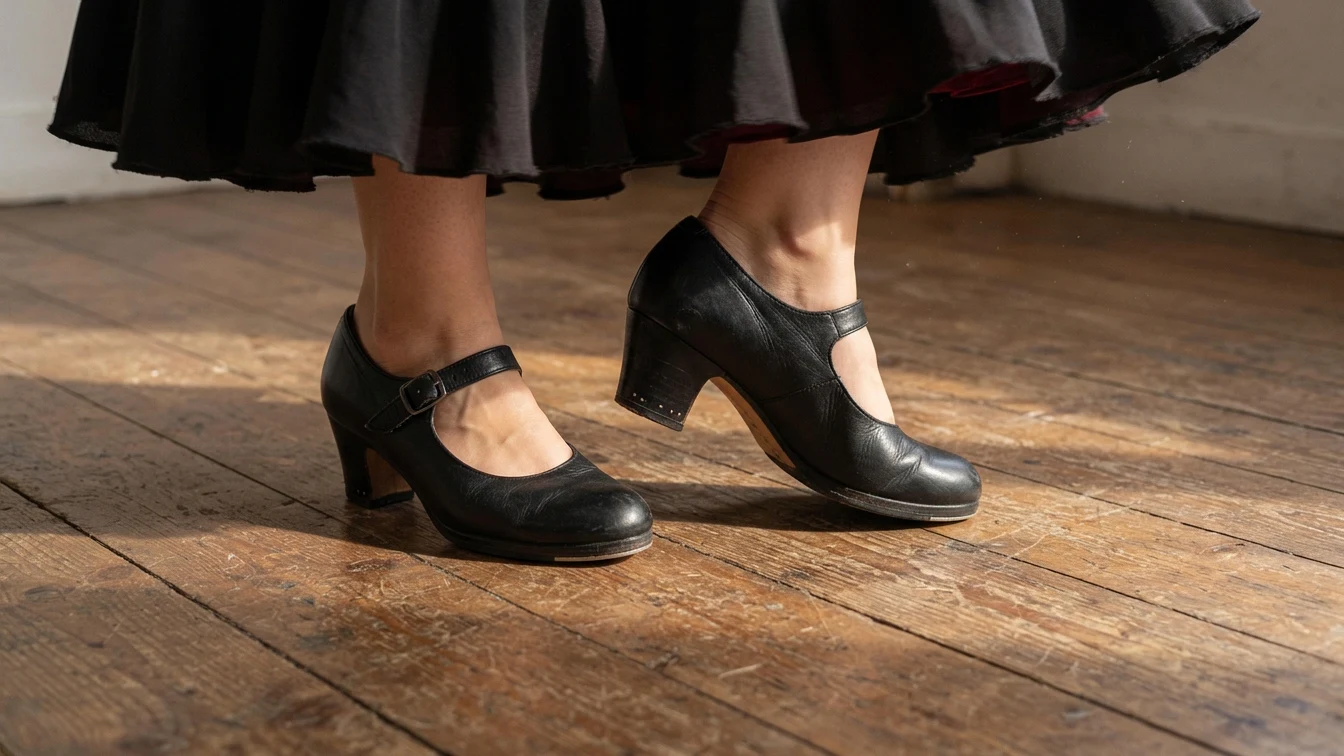
    Close-up of beginner feet in black flamenco shoes practicing a slow step on a wooden floor

    Rhythm: understanding compás

    Compás is the rhythmic cycle of each flamenco style. Some styles, such as soleá, alegrías and bulerías, use a 12-beat cycle with accents on beats 3, 6, 8, 10 and 12. Others, such as tangos and rumba, use a more familiar four-beat feel. Sevillanas, often taught first, follow a triple-time pattern organized in short, repeating sections.

    The fastest way to absorb compás is clapping. Clap all 12 beats evenly while counting aloud, then clap louder on the accented beats. Once you can do that with a recording, your footwork will start to fall in the right places almost on its own.

    What to wear to your first classes

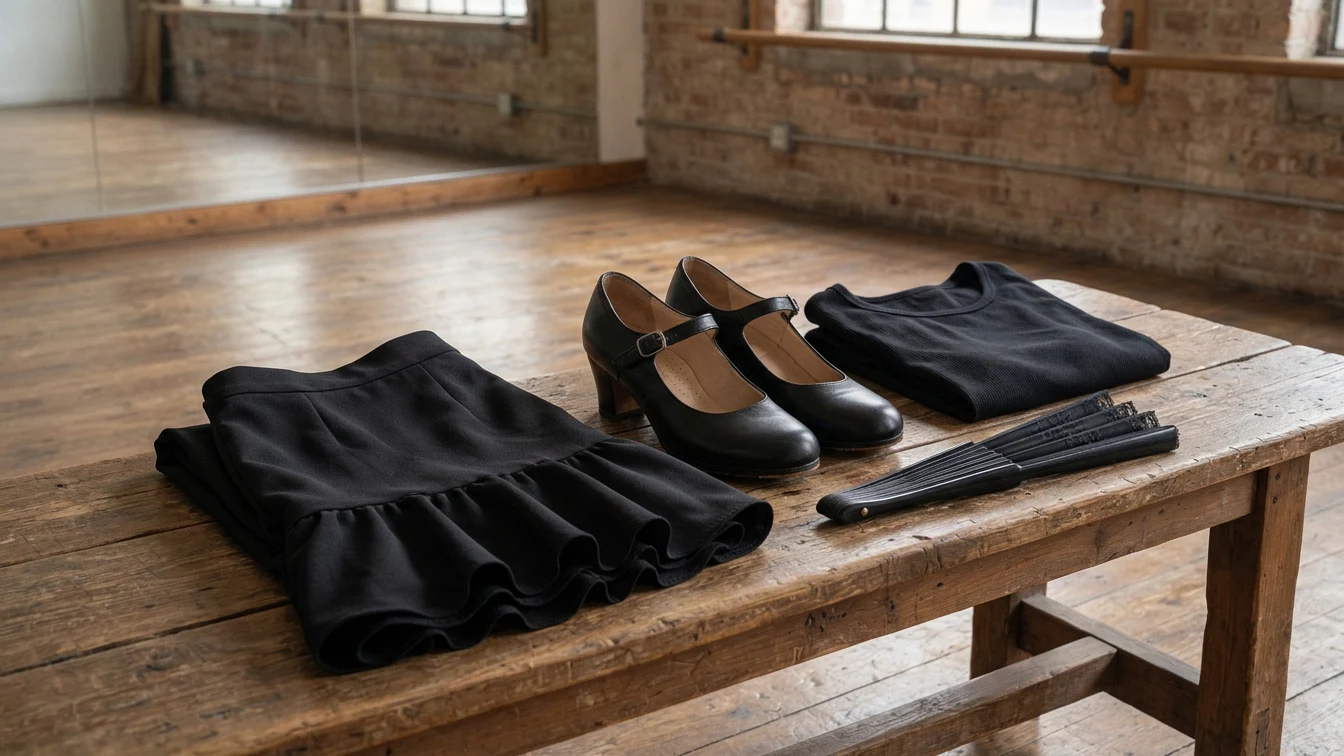
    You do not need a full costume to begin. For the first lessons, comfortable clothes and a pair of shoes with a small heel and a smooth sole are enough. As you continue, the two purchases that make the biggest difference are:

    ItemWhy it mattersWhen to buy
    Flamenco shoesFirm heel and nailed sole produce the sound and protect the footAfter a few classes, once you know you will continue
    Practice skirtA wide skirt teaches you how to move the fabric and shows your foot placementWhen your class starts using skirt work
    Comfortable topLets the teacher see your posture and arm lineFrom the first class

    Our Shoes & Attire guides explain sizes, heel heights and what to avoid when you buy your first pair.

    Flamenco practice skirt, low-heeled shoes, top and fan laid out on a studio bench

    How to practice at home without hurting yourself

    Practice between classes speeds up learning, but footwork on the wrong floor can damage your joints and your home. Concrete and tiles are hard on the knees, and carpet absorbs the sound and catches the shoe. A sheet of plywood on top of a rug, or a purpose-made dance board, gives a firm, slightly springy surface.

    • Warm up for five to ten minutes with marching, ankle circles and gentle knee bends.
    • Keep sessions short at first: 15 to 20 minutes of focused work is enough.
    • Alternate footwork with arm and posture drills to rest the legs.
    • Stop if you feel sharp pain in the knees, shins or feet.

    As a general health reference, the NHS physical activity guidelines for adults recommend at least 150 minutes of moderate activity a week, and dance practice can count toward that. More ideas are collected in our Practice at Home section.

    Health note: this guide is for general information and does not replace a qualified dance teacher or a health professional. If you have knee, hip, back or foot problems, talk to a doctor or physiotherapist before starting footwork.

    Common mistakes adult beginners make

    1. Rushing the feet. Speed without control creates uneven sounds and strain. Slow, clean repetitions build speed safely.
    2. Looking at the floor. It collapses the posture. Look ahead and feel the steps instead.
    3. Tense shoulders. Lifted shoulders make the arms look stiff. Breathe out and let them drop.
    4. Ignoring the music. Learning steps without counting makes them hard to use later. Always practice with rhythm.
    5. Comparing yourself to performers. Professional dancers train for many years. Measure progress against your own first class.

    How to choose your first class or teacher

    A good beginner class makes the first months much easier. When you compare options, in person or online, look at a few concrete points rather than at how impressive the teacher’s performances are:

    • A real beginner level. The class description should say it is for people with no experience, and the first lessons should focus on posture, arms and slow footwork.
    • Warm-up included. A teacher who starts every class with a warm-up is thinking about your joints.
    • Counting out loud. Teachers who count the compás and explain where the accents fall help you understand the music, not only copy steps.
    • Individual feedback. In small groups the teacher can correct your posture and foot placement. Online, look for classes that review videos or offer live correction.
    • A clear progression. Ask what you will be able to dance after a term. A short, complete choreography is a good sign.

    If there is no school near you, online classes combined with a few in-person workshops a year work well for many adults. Whatever you choose, record yourself every few weeks: comparing videos shows progress that is hard to feel from the inside.

    How long does it take to feel comfortable?

    There is no fixed timeline, because it depends on how often you practice, your previous experience and the style you study. What most teachers agree on is that consistency beats intensity: two regular classes a week plus short home practice will take you further than an occasional long session. Expect the first months to focus on posture, arms, simple footwork and one beginner-friendly choreography.

    Frequently asked questions

    Am I too old to start flamenco?

    Many people start flamenco in their thirties, forties, fifties and beyond. Classes for adult beginners are common, and the dance values expression and presence as much as athletic ability. If you have health conditions, check with your doctor before starting footwork.

    Do I need a partner to learn flamenco?

    No. Flamenco is mostly danced solo or in groups where each dancer has their own space. Some styles, such as sevillanas, are danced in pairs, but classes rotate partners or teach the steps individually.

    Can I learn flamenco only online?

    Online classes are a good way to learn posture, arms, rhythm and choreography. A teacher who can see you in person, or review your videos, helps correct footwork and alignment, which is harder to judge alone.

    Which flamenco style should a beginner learn first?

    Many schools start with sevillanas or tangos because their structures are clear and repetitive. Others begin with simple exercises in soleá or alegrías rhythm. Follow your teacher’s plan and focus on counting correctly.

    Is flamenco a good workout?

    Flamenco works the legs, core and arms and raises the heart rate during footwork sections. It can be part of an active lifestyle, as long as you warm up and progress gradually.

    Your next step

    Start with the body: posture is the base for every other skill, and it is something you can practice today in front of a mirror. Then work through our beginner guides on posture, arms and first steps in order, and read how Flamenco del Mar prepares its guides if you want to know who is behind them.