
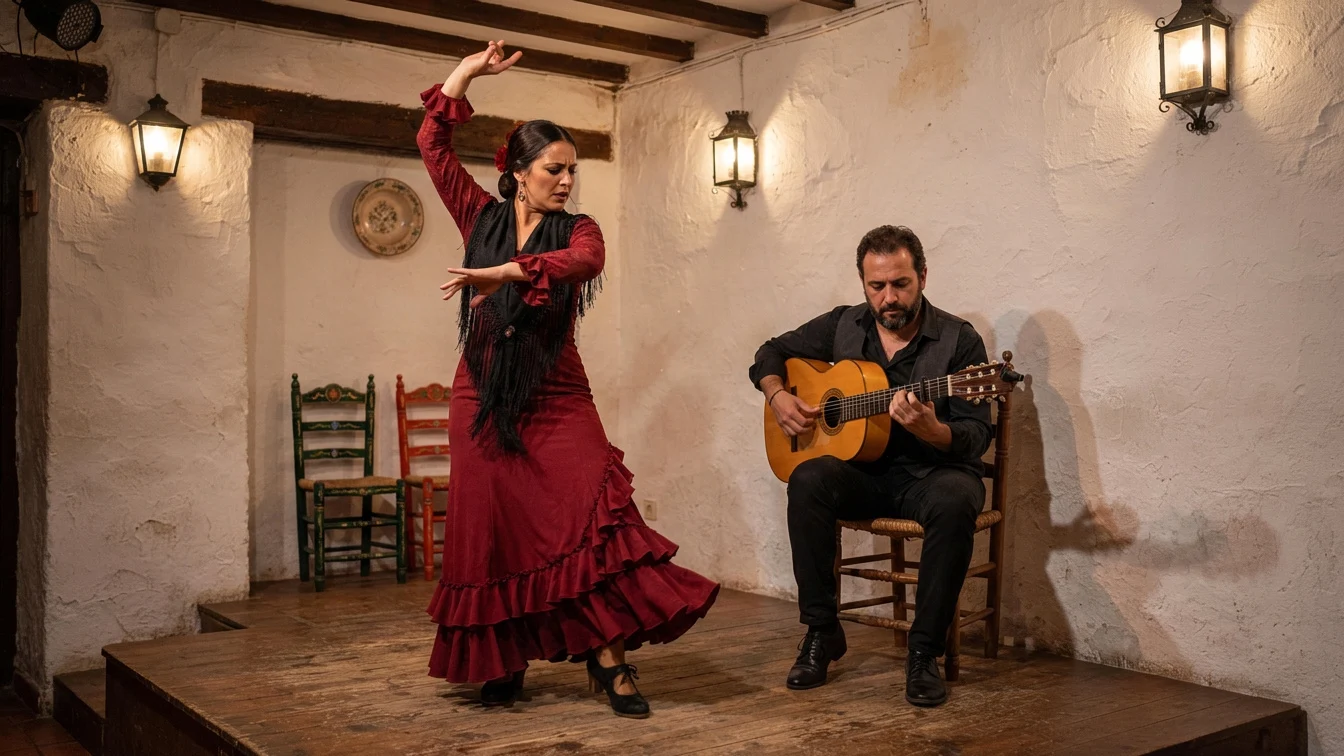
What is flamenco? It is an art form from Andalusia, in southern Spain, that brings together singing, guitar playing and dance, along with handclaps, finger snaps and shouts of encouragement. A flamenco performance can be intimate and slow or fast and explosive, but it always follows rhythmic patterns that the musicians and the dancer share.
Many people first meet flamenco as a dance with ruffled dresses and loud footwork. That image is real, but it is only one part of the picture. Understanding the whole art makes the dance easier to learn, because in flamenco the dancer is also part of the music.
The three pillars: cante, toque and baile
Flamenco is usually described through three elements that can appear together or alone:
| Element | Spanish term | Role |
|---|---|---|
| Song | Cante | Considered the heart of flamenco; the voice carries the emotion and the lyrics |
| Guitar | Toque | Keeps the rhythm, plays introductions and answers the singer |
| Dance | Baile | Expresses the song with the body and adds rhythm with the feet and hands |
Around these three you will hear palmas (rhythmic handclaps), pitos (finger snaps) and jaleo (shouts such as “olé” that encourage the performers). In many modern performances the cajón, a wooden box drum, also supports the rhythm.
Where flamenco comes from
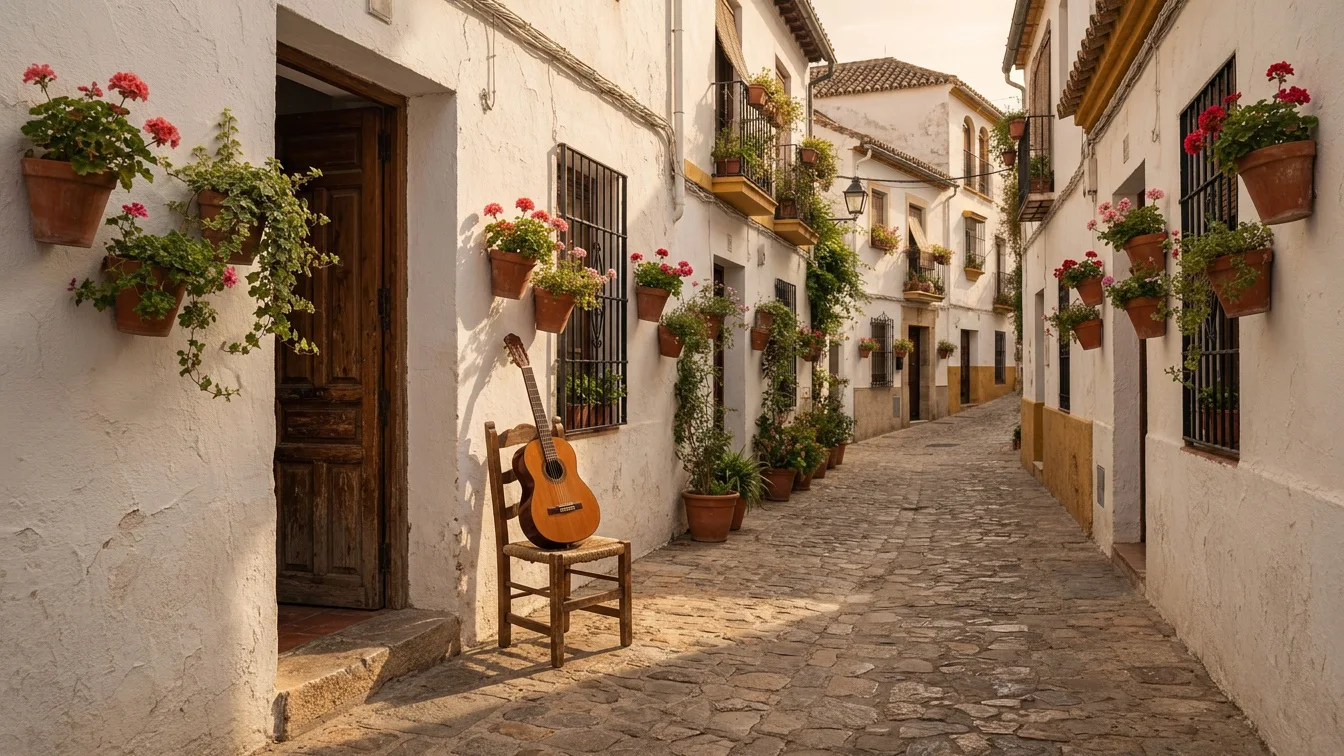
Flamenco took shape in Andalusia over centuries, through the meeting of many cultures that lived in the region, with a central role played by Andalusian Gitano (Roma) communities. Historians still debate the details of its origins, and the art has kept evolving through the 19th and 20th centuries, from small gatherings to cafés cantantes, theatres and international stages.
Its cultural importance is officially recognized: in 2010, UNESCO inscribed flamenco on its Representative List of the Intangible Cultural Heritage of Humanity, describing an expression transmitted through families, groups and schools. The regional government of Andalusia also maintains a public portal dedicated to flamenco, with information on festivals, archives and education.
What makes flamenco unique
Rhythm with fixed cycles
Each flamenco style follows a rhythmic cycle called compás. Several of the most important styles count in 12 beats, with accents in specific places, which gives flamenco its unmistakable swing. Dancers, guitarists and singers all lock into the same cycle.
Styles called palos
Flamenco is divided into styles known as palos, each with its own rhythm, mood and often its own region of origin. Soleá is deep and solemn, alegrías is bright and festive, bulerías is fast and playful, and tangos has a strong, earthy four-beat feel.
Improvisation inside a structure
Flamenco performers improvise, but within rules. The dancer gives signals to the guitarist with the feet, and the guitarist follows the singer. This conversation is what makes a live performance feel alive.
Duende
Flamenco artists and audiences talk about duende: a moment of deep emotional intensity that moves everyone present. It cannot be taught directly, but it is the reason many people fall in love with the art.
Flamenco dance at a glance
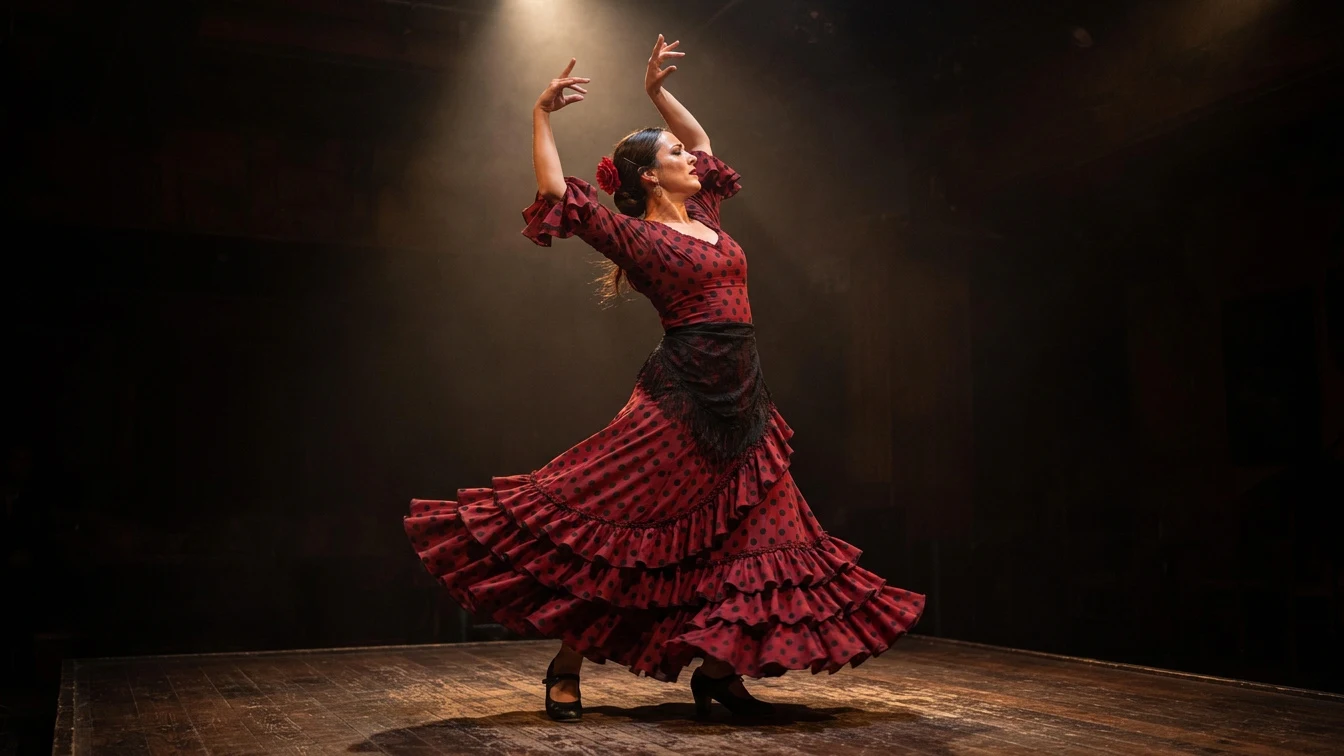
The dance combines a proud, upright posture with expressive arms and rhythmic footwork. Women’s and men’s styles were historically different, with more flowing arms and skirt work for women and more footwork for men, but today dancers of any gender learn the full range. Accessories such as the fan, the shawl and castanets appear in some styles.
- Posture: chest lifted, shoulders down, knees soft.
- Arms (braceo): wide, rounded paths that start from the back.
- Hands (floreo): circular wrist and finger movements.
- Footwork (zapateado): heel, ball and flat-foot strikes that create rhythm.
If you want to start dancing, our complete guide to flamenco dance for beginners explains each of these skills in the order teachers use.
How flamenco is performed today
Flamenco lives in very different settings, and each one shows a different side of the art. Knowing them helps you choose what to watch as a beginner.
- Peñas and private gatherings: small clubs and family celebrations where singers, guitarists and dancers perform for people who know the art well. The atmosphere is intimate and spontaneous.
- Tablaos: venues dedicated to flamenco, with a small stage close to the audience. Shows usually combine several palos and give you a full view of song, guitar and dance.
- Theatres and festivals: large productions with choreography, lighting and sometimes a full company. Many international festivals bring flamenco to cities far from Spain.
- Schools and studios: academies teach the dance, guitar and song, from children to adult beginners, and often hold student showcases.
- Fusion and new flamenco: since the late 20th century many artists have mixed flamenco with jazz, pop and other music, which brought it to new audiences while purists continue the traditional forms.
If you can, watch a live performance before or during your first months of classes. Seeing how the dancer listens to the singer and guitarist explains more about flamenco than any description, and it will make the rhythm exercises in class feel much more meaningful.
When you watch, pay attention to three moments: the start, when the guitarist sets the rhythm and the dancer waits; the middle, when the dancer responds to the singer’s verses with arms and small steps; and the footwork section near the end, which often speeds up until a final remate closes the piece.
Words you will hear in your first class
| Word | Meaning |
|---|---|
| Compás | The rhythmic cycle of a style |
| Palo | A flamenco style, such as soleá or bulerías |
| Zapateado | Footwork |
| Braceo | Arm movement |
| Llamada | A call, a footwork signal that marks a change |
| Remate | A closing phrase that finishes a section |
| Bailaor, bailaora | Flamenco dancer |
| Tablao | A venue dedicated to flamenco performances |
Frequently asked questions
Is flamenco Spanish or Gypsy?
Flamenco developed in Andalusia, Spain, through the interaction of different communities, with a central contribution from Andalusian Gitano (Roma) people. It is considered part of Spanish and Andalusian culture and is recognized by UNESCO as heritage of humanity.
Is flamenco a dance or a type of music?
Both. Flamenco is a complete art that includes song, guitar music and dance. Each can be performed alone, but they are deeply connected.
What does “olé” mean in flamenco?
“Olé” is a form of jaleo, an expression of encouragement and appreciation shouted by performers or the audience at a strong moment of the performance.
Do you need to speak Spanish to learn flamenco?
No. Teachers worldwide teach in many languages. You will learn a small set of Spanish terms for steps and rhythms, which quickly become familiar.
Your next step
Now that you know what flamenco is, the best place to start dancing is the body itself. Read our guide to the basics of flamenco for beginners, starting with posture, and come back to the music side when you explore flamenco rhythm and styles.