
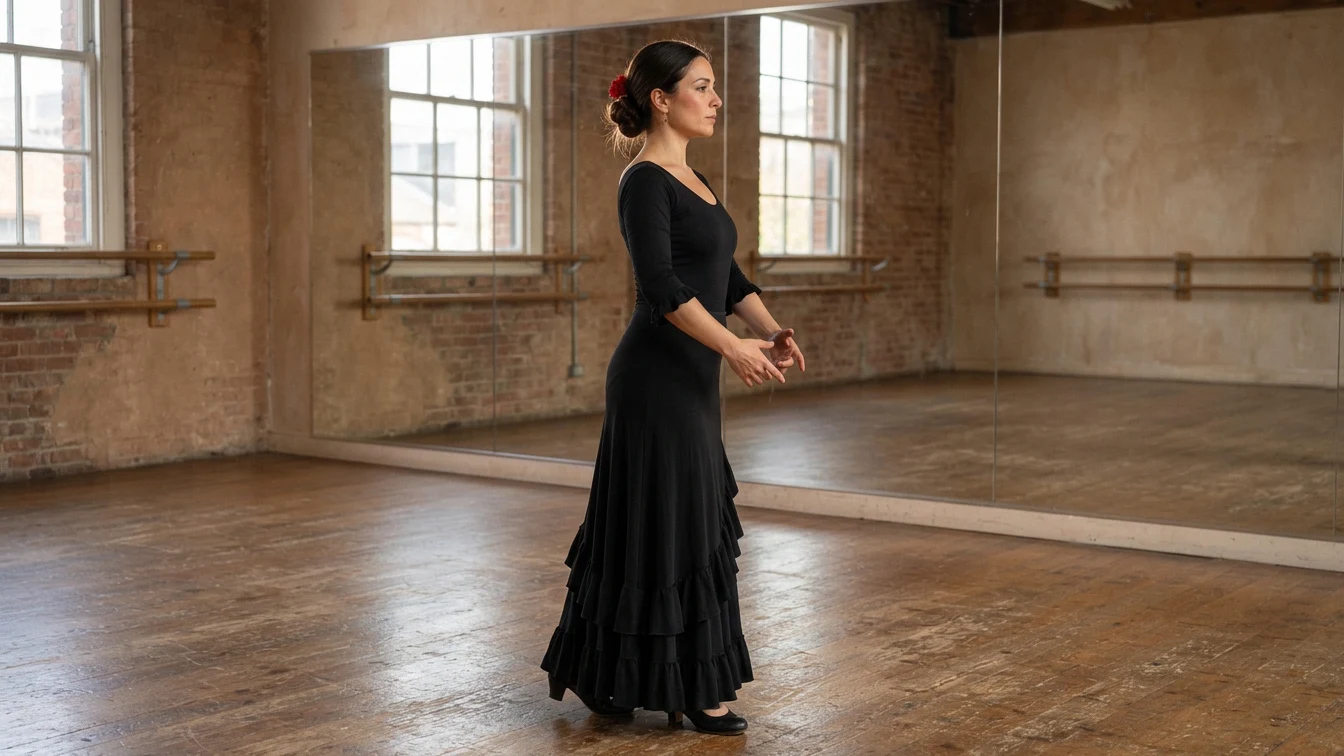
Good flamenco posture is lifted and grounded at the same time: the chest rises, the shoulders stay down and back, the core is gently active, the knees are soft and the weight rests slightly forward. Every movement in flamenco, from the arms to the fastest footwork, depends on this base.
Teachers spend a lot of time on posture with beginners because a weak stance causes two problems later: footwork sounds uneven and the lower back gets tired or sore. The good news is that posture can be practiced anywhere, without music or special shoes.
What you need
- A mirror where you can see your whole body, ideally from the side as well.
- Comfortable clothes that let you see the line of your back.
- Five to ten minutes a day.
Build the posture in seven steps
- Feet: stand with your feet together or slightly apart, toes pointing forward.
- Knees: bend them just enough to unlock them. They should never be pushed back.
- Pelvis: let it sit in neutral, neither tucked under nor tipped forward.
- Core: gently draw the belly in, as if closing a tight belt one notch.
- Chest: breathe in and let the chest rise without lifting the shoulders.
- Shoulders: slide the shoulder blades down and slightly together.
- Head: lengthen the back of the neck, keep the chin level and look ahead with intention.
Hold the position for 30 seconds while breathing normally. If you need to hold your breath to stay lifted, you are using too much force.
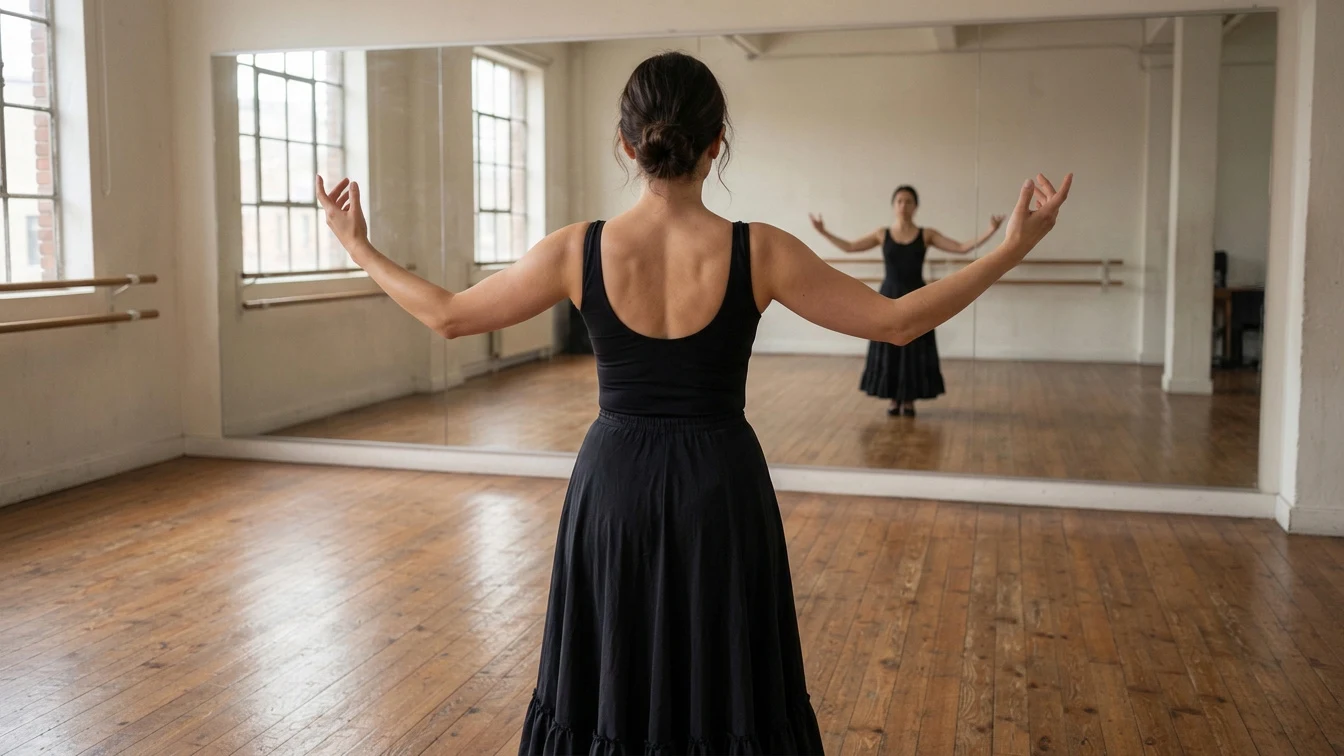
Mirror checklist
| Check | Correct | Needs adjustment |
|---|---|---|
| Shoulders | Low and relaxed, neck looks long | Raised toward the ears |
| Chest | Lifted, open | Collapsed or pushed out by arching the back |
| Lower back | Long, natural curve | Deep arch or flat and tucked |
| Knees | Slightly bent | Locked straight |
| Weight | Over the balls of the feet, heels still touching | Back on the heels |
| Gaze | Forward and proud | Down at the floor |
Common posture mistakes and how to fix them
Arching the lower back to lift the chest
This is the most frequent error. It looks proud in the mirror but compresses the lower back. Fix it by engaging the belly first and then lifting the chest from the ribs, not from the waist.
Shoulders creeping up during arm work
When the arms rise, the shoulders tend to follow. Practice raising the arms slowly while watching the space between your shoulders and ears. If it shrinks, lower the arms and start again.
Straight, locked knees
Locked knees make footwork jarring and transfer impact to the joints. Keep a small, constant bend, even when standing still.
Leaning back during footwork
Beginners often lean back when the feet get busy. Keep the weight slightly forward and the torso still, so the legs work independently from the upper body.
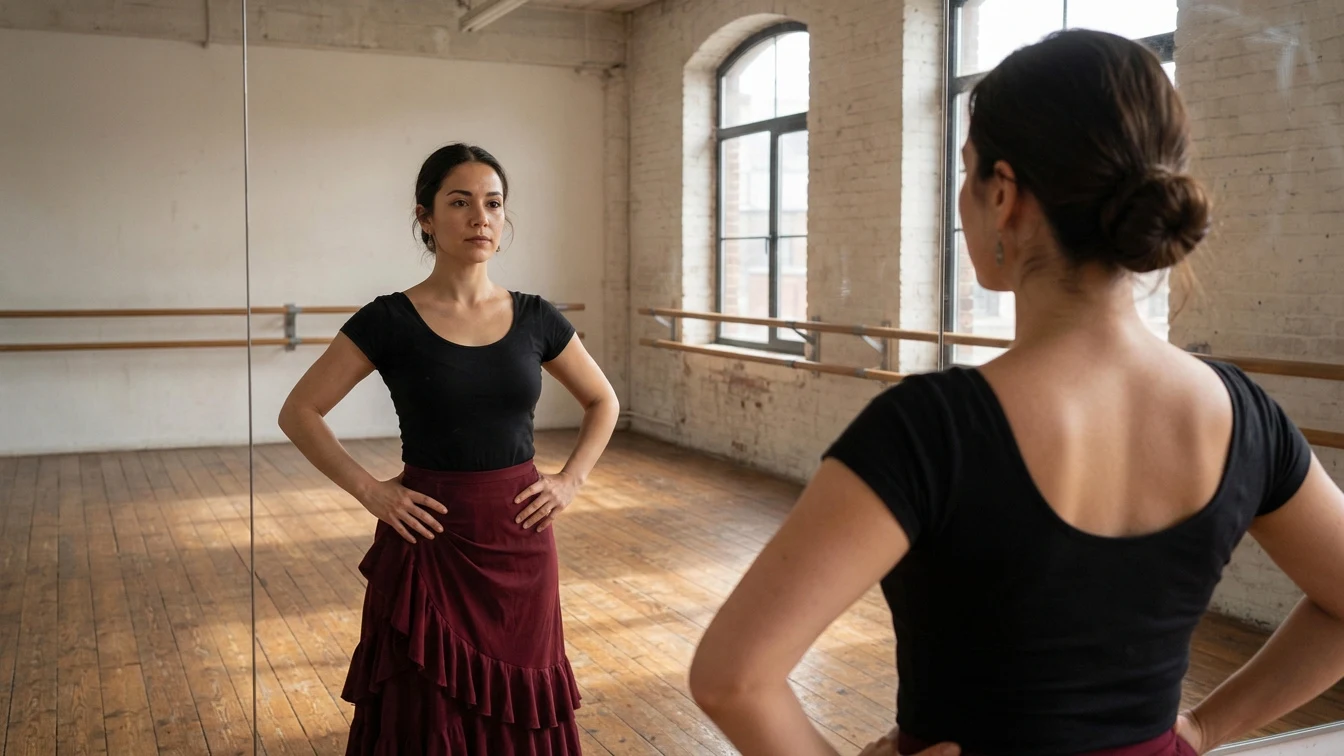
How posture changes when you start to move
Standing still in good posture is the first step. The real challenge is keeping it while the arms, hips and feet are busy. Each part of the dance tests posture in a different way:
| Movement | What tends to break | What to focus on |
|---|---|---|
| Arm work (braceo) | Shoulders lift toward the ears | Keep the shoulder blades sliding down as the arms rise |
| Footwork | Torso bounces or leans back | Weight slightly forward, belly engaged, head still |
| Turns | Chest collapses, head drops | Lift the chest before turning and spot a fixed point |
| Skirt work | Back arches when the hands hold the skirt | Keep the ribs closed and the lower back long |
| Walking steps | Knees straighten | Keep a small bend in both knees on every step |
A practical way to train this is to add one movement at a time. Hold the posture, then add slow arms for one minute. When the shoulders stay down, replace the arms with simple marching footwork. Only combine arms and feet once each part works on its own.
Fatigue is the enemy of posture. In the last minutes of a class or a home session, notice when your shoulders rise or your chest drops, and use that moment to reset rather than pushing through with poor alignment.
Three short exercises to make it stick
- Wall check (1 minute): stand with your back near a wall, heels a few centimeters away. Feel the back of the head and the shoulder blades lightly touch it, then step away and keep the shape.
- Breathing lift (2 minutes): in posture, breathe in for four counts lifting the chest, breathe out for four counts keeping it lifted.
- Posture walk (2 minutes): walk slowly around the room keeping the posture, as if crossing a stage.
Once posture feels natural, the next skills are the arms and simple footwork, explained in our flamenco dance for beginners guide. If you are curious about the art behind the dance, read what flamenco is and where it comes from.
Health note: this guide is general information and does not replace a qualified teacher or a health professional. If you have back, hip or knee pain, consult a doctor or physiotherapist before practicing.
Frequently asked questions
Why do flamenco dancers lift the chest so much?
The lifted chest gives the dance its proud, expressive character and frees the arms to move. It also keeps the body aligned so the legs can produce clean footwork.
Should my knees be bent in flamenco?
Yes, slightly. Soft knees absorb the impact of footwork and help you stay balanced. Locked knees transfer the impact to the joints.
How long does it take to get good posture?
Many beginners feel more comfortable after a few weeks of daily practice, but posture keeps improving for as long as you dance. Short, frequent practice works better than long sessions.
Can posture practice help outside of dance?
The awareness you build in flamenco often carries into daily life, making you more conscious of how you stand and sit. It is not a treatment for back problems, which need medical advice.
Your next step
Practice the seven steps for five minutes today, then move on to the arms. All the beginner topics are collected in our Flamenco Basics section.